
Product Details
Research-grade peptides with clear specifications, published lab results where available, and storage guidance for laboratory use.

HGH-191AA -36iu
Overview
HGH-191AA is a synthetic, bioidentical form of human growth hormone composed of the full 191–amino acid sequence, designed to replicate the exact structure and function of endogenous growth hormone.
$75.00
Out of stock
Share this item
Description
HGH-191AA is a synthetic, bioidentical form of human growth hormone composed of the full 191–amino acid sequence, designed to replicate the exact structure and function of endogenous growth hormone. Once introduced into the system, it binds to growth hormone receptors (GHR) located on the surface of various target cells, particularly in the liver, muscle tissue, bone, and connective tissue. This receptor binding initiates intracellular signaling cascades—primarily through the JAK2/STAT pathway—which leads to changes in gene expression and drives a wide range of anabolic and metabolic processes throughout the body.
One of the primary downstream effects of this activation is the increased production of insulin-like growth factor 1 (IGF-1), which acts as a central mediator of growth hormone activity. IGF-1 enhances protein synthesis by increasing amino acid uptake into cells and stimulating ribosomal activity, leading to muscle fiber growth and repair. It also promotes the activation and proliferation of satellite cells in muscle tissue, which are essential for muscle regeneration and hypertrophy.
At the metabolic level, HGH-191AA significantly shifts how the body utilizes energy. It promotes lipolysis by activating hormone-sensitive lipase in adipose tissue, which breaks down stored triglycerides into free fatty acids. These fatty acids are then used as a primary energy source, effectively reducing fat storage while increasing fat oxidation. Simultaneously, it reduces the reliance on glucose as a primary fuel source, creating a metabolic environment that favors lean tissue preservation and fat utilization.
In connective tissue and structural systems, HGH-191AA enhances collagen synthesis and extracellular matrix production, strengthening tendons, ligaments, and skin. It also stimulates osteoblast activity in bone tissue, supporting bone remodeling and density by increasing mineral deposition and structural integrity.
Beyond structural and metabolic effects, HGH-191AA plays a key role in cellular repair and regeneration. It supports cellular turnover, enhances tissue recovery after stress or damage, and improves overall cellular resilience. It also influences fluid balance, nutrient partitioning, and the transport of key substrates into cells, further optimizing the internal environment for growth and repair.
Overall, HGH-191AA functions as a master regulator of growth, metabolism, and tissue maintenance—coordinating muscle development, fat metabolism, structural integrity, and cellular regeneration through a tightly integrated hormonal signaling network.
HGH 191AA / Somatropin Research Standard Research Details
Human growth hormone is a 191-amino-acid pituitary protein. Research focuses on growth hormone receptor binding, JAK2/STAT pathway signaling, liver IGF-1 induction, protein/anabolic signaling, lipolysis, and tissue-specific metabolic regulation.
Independent lab report not yet posted for this product (tested lots are listed on our Lab Results page)
Full 191-amino-acid human growth hormone sequence; verify lot COA
Lyophilized research material unless otherwise specified by COA
Research use only
Research Background
191-amino-acid growth-hormone protein studied for growth hormone receptor activation, JAK2/STAT signaling, and IGF-1 axis biology. Key OneBio research contexts include growth-hormone receptor assays, jak/stat signaling, igf-1 axis research, protein hormone analytics, and metabolic pathway studies.
Specifications
| Compound | HGH 191AA / Somatropin Research Standard |
| SKU / Product | hgh-191aa |
| Molecular Weight | ~22.1 kDa |
| Formula / Classification | Protein; verify by COA |
| Database / Identity Note | Protein biologic; verify by COA |
| Storage | -4°F long-term; 35-46°F short-term refrigerated; keep sealed, dry and away from light |
Quality Verification
Each batch should be reviewed against its Certificate of Analysis, including identity confirmation, purity method, mass/sequence or component confirmation, appearance, and lot-specific handling notes. Blend products should be checked against component-ratio documentation where available.
Handling
Prepare only inside a qualified laboratory using validated solvent choice, concentration, sterility, and storage protocols. Handle only in a qualified laboratory under your institution’s validated protocols. Maintain cold-chain handling and avoid repeated freeze-thaw cycles.
Product-Specific Q&A
What is HGH 191AA / Somatropin Research Standard used for in research?
HGH 191AA / Somatropin Research Standard is used as a research material for growth-hormone receptor assays, jak/stat signaling, igf-1 axis research, protein hormone analytics, and metabolic pathway studies. It is not offered for diagnostic, therapeutic, clinical, veterinary, or human-use applications.
What mechanism is most relevant for HGH 191AA / Somatropin Research Standard?
191-amino-acid growth-hormone protein studied for growth hormone receptor activation, JAK2/STAT signaling, and IGF-1 axis biology.
How should HGH 191AA / Somatropin Research Standard identity and purity be verified?
Use the lot-specific Certificate of Analysis to confirm identity, purity, mass/sequence or component profile, and any method-specific data such as LC-MS/HPLC. Technical values on this page are research references and should be checked against the delivered lot.
What storage conditions apply to HGH 191AA / Somatropin Research Standard?
-4°F long-term; 35-46°F short-term refrigerated; keep sealed, dry and away from light. Keep sealed, dry, protected from light, and avoid repeated freeze-thaw cycles after preparation.
References
- PMID 30899019: Acromegaly. Nature reviews. Disease primers 2019.
- PMID 17047392: Growth hormone receptor antagonists. Neuroendocrinology 2006.
- PMID 38677286: Normal or improved cardiovascular risk factors in IGF-I-deficient adults with growth hormone receptor deficiency. Med (New York, N.Y.) 2024.
Expanded Product Information
Specifications, documentation, storage and FAQ for this research material.
| Product | Current product |
|---|---|
| Form | Lyophilized research material unless otherwise stated on the product label. |
| Purity / Identity | See product listing and available COA/batch documentation. |
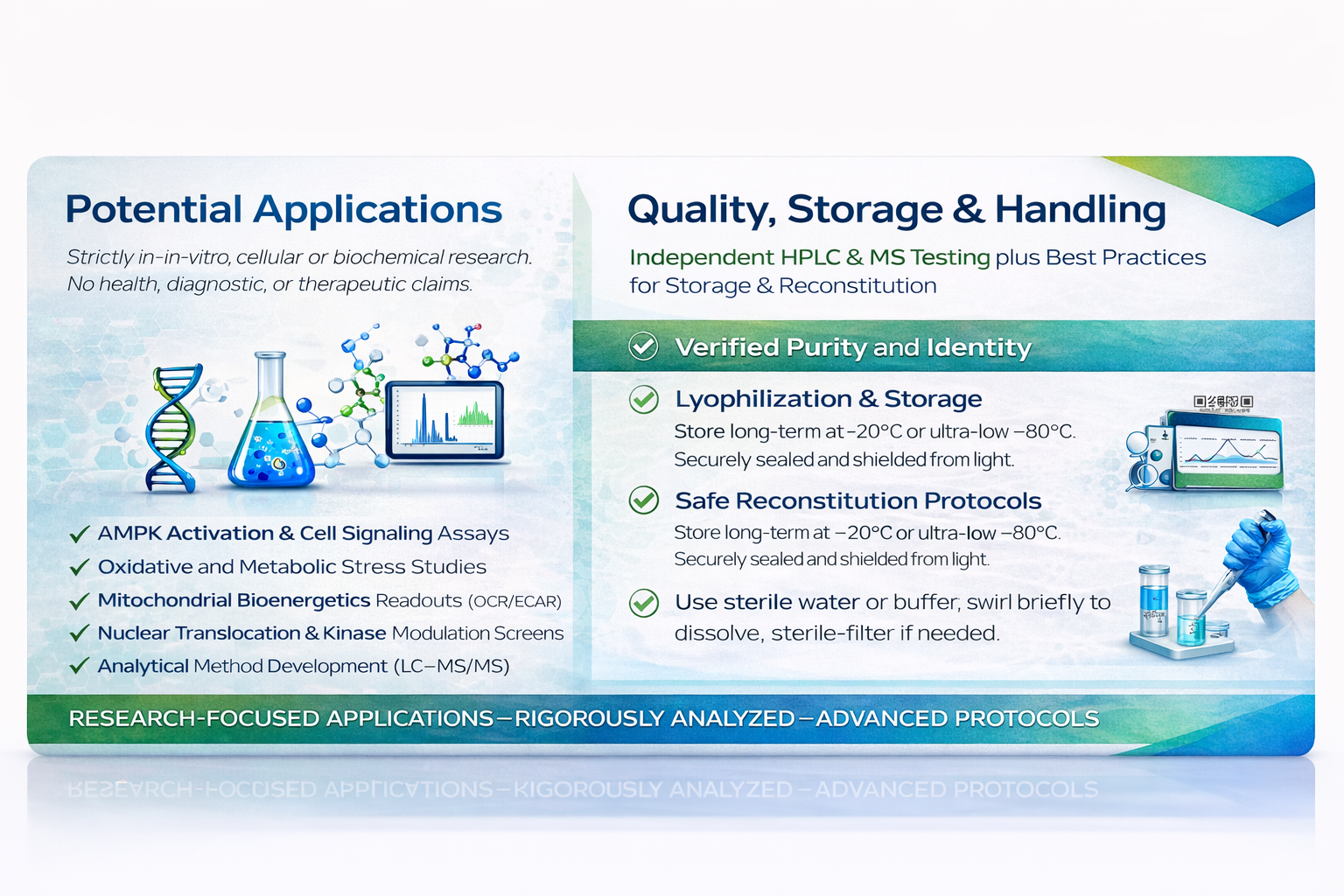
| Storage | Long-term freezer storage around -4°F. Short-term refrigerated storage 35–46°F. Keep sealed, dry and away from light. |
| Use Standard | Research-use only; not for human or animal administration. |
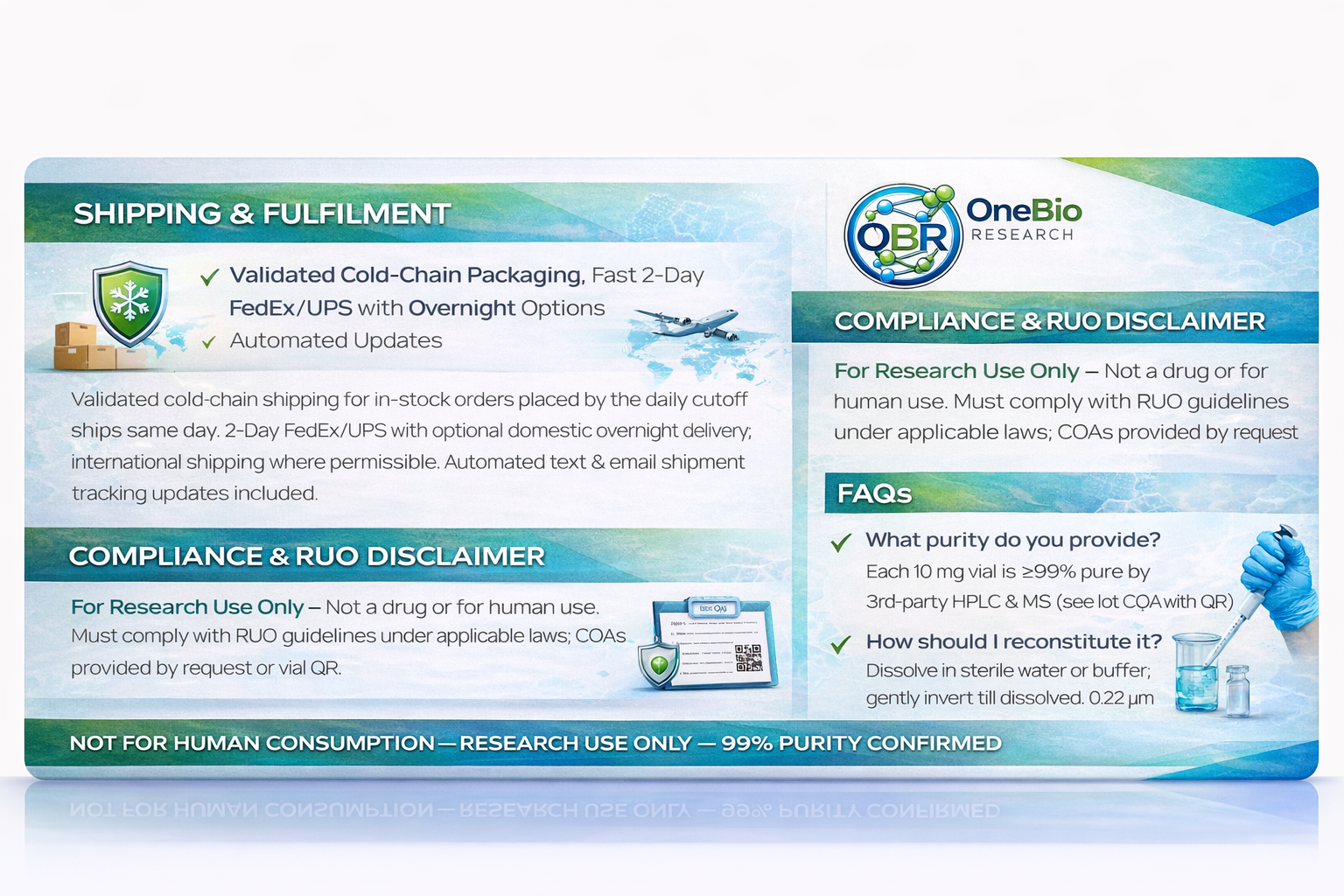
Third-party verification: Review the available Certificate of Analysis and batch documentation before use. Verify identity, purity, appearance, and lot-specific details against your lab requirements.
Are these products for research use only?
Yes. OneBio Research products are sold strictly for laboratory research and analytical testing.
Where do I find storage guidance?
Use the product label, COA, and the storage tab above. Long-term freezer storage is commonly referenced around -4°F; refrigerated short-term storage is 35–46°F.
Can I request documentation?
Yes. Use the COA/documentation request link or contact OneBio Research with the product and lot details.
Reviews
There are no reviews yet.