
Product Details
Research-grade peptides with clear specifications, COA-backed quality verification, and Fahrenheit storage guidance for laboratory use.
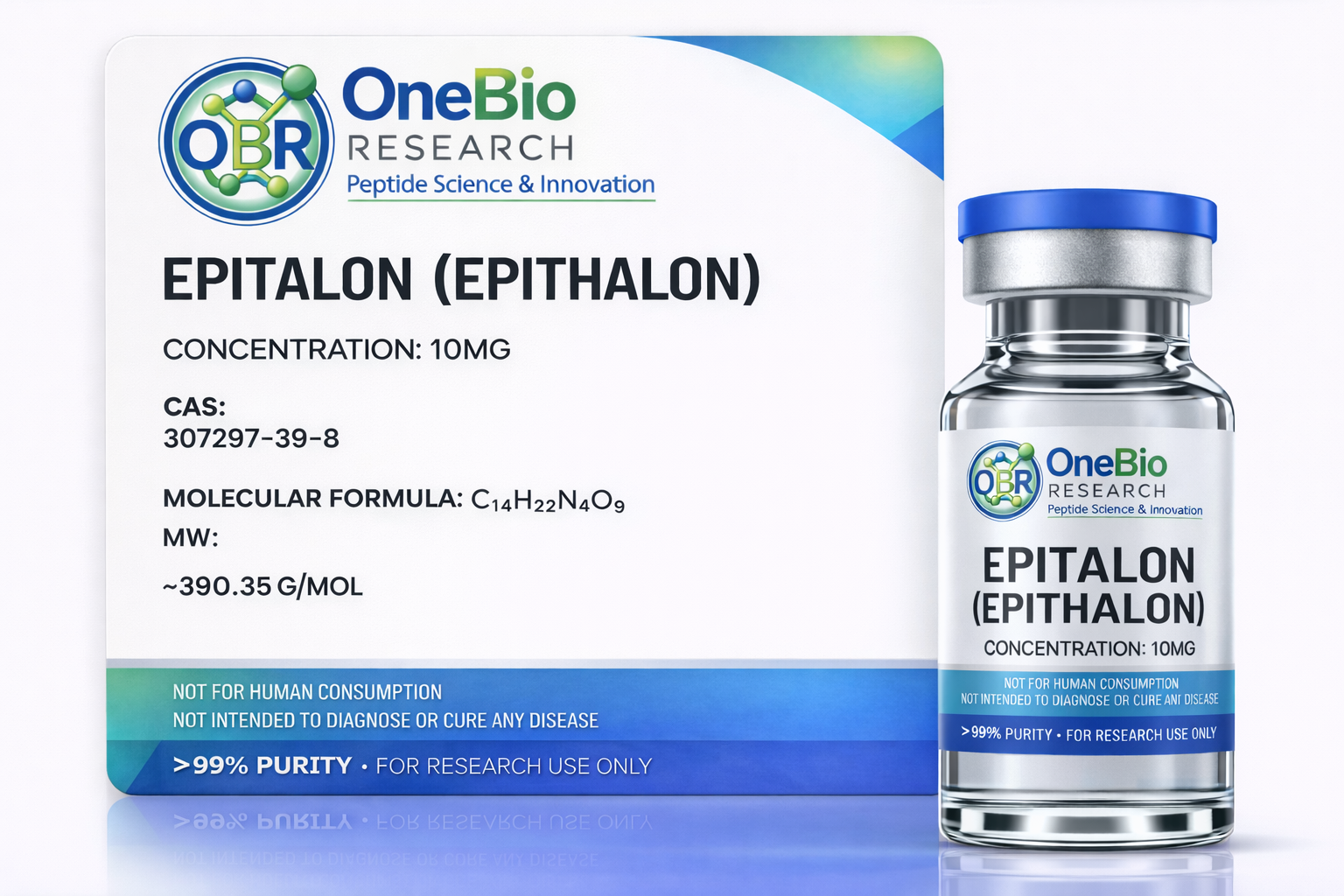
EPITHALON -10MG
Overview
Epithalon, also known as epitalon, is a synthetic tetrapeptide composed of four amino acids: alanine, glutamic acid, aspartic acid, and glycine.
$25.00
Out of stock
Share this item
Description
Epithalon, also known as epitalon, is a synthetic tetrapeptide composed of four amino acids: alanine, glutamic acid, aspartic acid, and glycine. It is naturally found in the pineal gland and is known for its role in regulating circadian rhythms and hormone production. Functionally, epithalon is thought to stimulate the enzyme telomerase, which lengthens telomeres—the protective caps on chromosomes. By maintaining telomere length, epithalon is associated with slowing cellular aging. In addition to its potential telomeric effects, it influences antioxidant activity, helping protect cells from oxidative damage. It also modulates melatonin production, regulating sleep-wake cycles. Beyond that, it has been observed to improve cellular energy metabolism, support immune function, and fortify antioxidant defenses. In essence, epithalon is a mitochondrial and genomic regulator, influencing longevity, cellular repair, and overall metabolic balance.
Epithalon / Epitalon Research Details
Epithalon (Epitalon) is the tetrapeptide Ala-Glu-Asp-Gly. Research literature, much of it from short-peptide/gerontology programs, examines telomerase activity, pineal/circadian signaling, oxidative stress, gene regulation, and cellular-aging endpoints.
99%+ target purity or lot-specific COA value
Ala-Glu-Asp-Gly
Lyophilized research material unless otherwise specified by COA
Research use only
Research Background
Synthetic tetrapeptide studied in pineal-peptide, telomerase, circadian, and aging-cell models. Key OneBio research contexts include short-peptide biology, telomerase/cell-aging assays, circadian research, and oxidative-stress models.
Specifications
| Compound | Epithalon / Epitalon |
| SKU / Product | epithalon |
| Molecular Weight | ~390.35 g/mol |
| Formula / Classification | C14H22N4O9 |
| Database / Identity Note | PubChem CID 219042 |
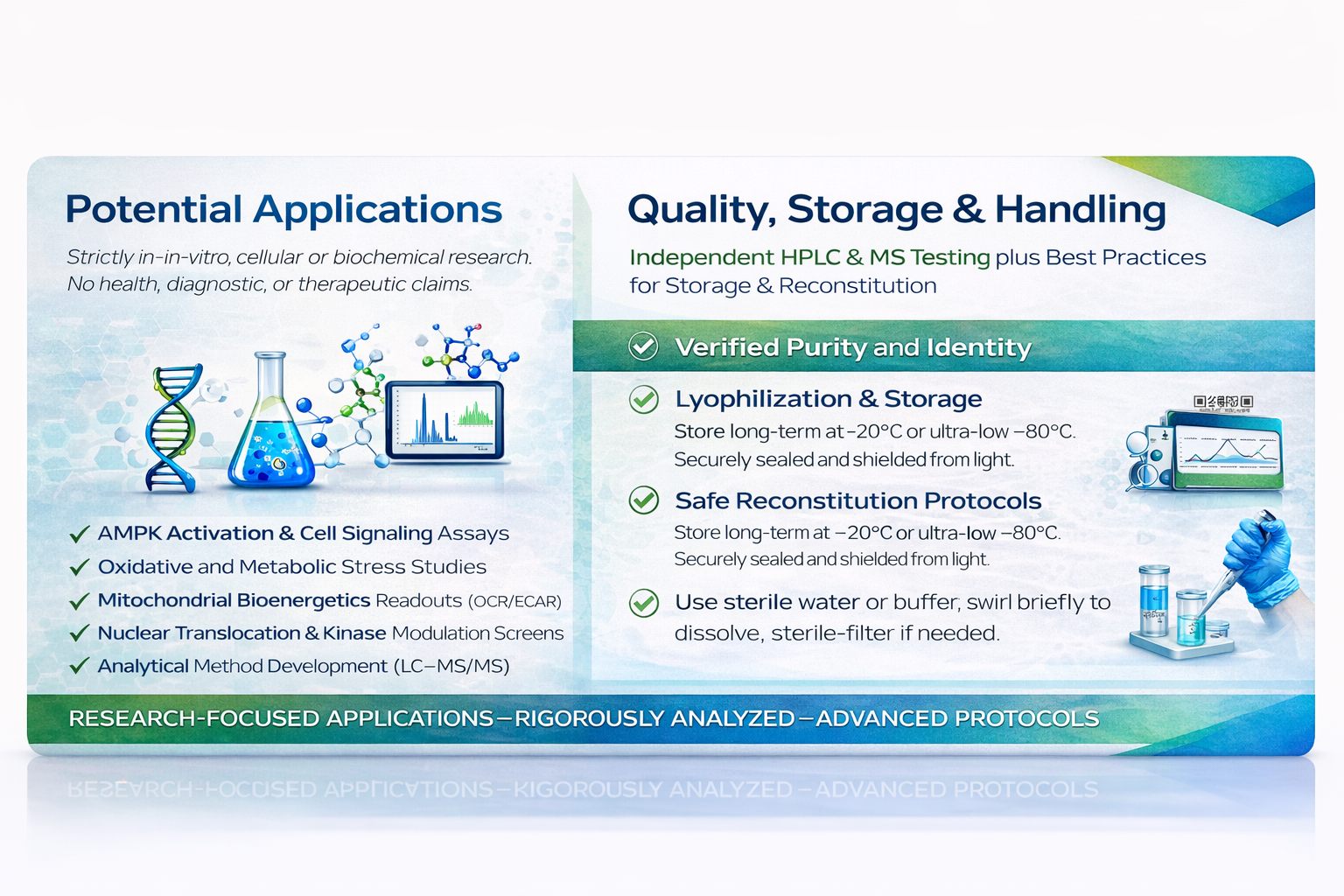
| Storage | -4°F long-term; 35-46°F short-term refrigerated; 39°F after reconstitution for up to 30 days when appropriate for the research protocol |
Quality Verification
Each batch should be reviewed against its Certificate of Analysis, including identity confirmation, purity method, mass/sequence or component confirmation, appearance, and lot-specific handling notes. Blend products should be checked against component-ratio documentation where available.
Laboratory Preparation
Prepare only inside a qualified laboratory using validated solvent choice, concentration, sterility, and storage protocols. For lyophilized peptides, use sterile deionized water or bacteriostatic water when appropriate for the research protocol, mix gently, maintain cold-chain handling, and avoid repeated freeze-thaw cycles.
Product-Specific Q&A
What is Epithalon / Epitalon used for in research?
Epithalon / Epitalon is used as a research material for short-peptide biology, telomerase/cell-aging assays, circadian research, and oxidative-stress models. It is not offered for diagnostic, therapeutic, clinical, veterinary, or human-use applications.
What mechanism is most relevant for Epithalon / Epitalon?
Synthetic tetrapeptide studied in pineal-peptide, telomerase, circadian, and aging-cell models.
How should Epithalon / Epitalon identity and purity be verified?
Use the lot-specific Certificate of Analysis to confirm identity, purity, mass/sequence or component profile, and any method-specific data such as LC-MS/HPLC. Technical values on this page are research references and should be checked against the delivered lot.
What storage conditions apply to Epithalon / Epitalon?
-4°F long-term; 35-46°F short-term refrigerated; 39°F after reconstitution for up to 30 days when appropriate for the research protocol. Keep sealed, dry, protected from light, and avoid repeated freeze-thaw cycles after preparation.
References
- PMID 40141333: Overview of Epitalon-Highly Bioactive Pineal Tetrapeptide with Promising Properties. International journal of molecular sciences 2025.
Expanded Product Information
PeptideTech-style product tools added beneath the existing OneBio product layout: tabs, specifications, COA guidance, shipping/storage information, stock-solution guidance, verification notes, and FAQ.
| Product | Current product |
|---|---|
| Form | Lyophilized research material unless otherwise stated on the product label. |
| Purity / Identity | See product listing and available COA/batch documentation. |
| Storage | Long-term freezer storage around -4°F. Short-term refrigerated storage 35–46°F. Reconstituted materials should be handled under validated laboratory protocols. |
| Use Standard | Research-use only; not for human or animal administration. |
Third-party verification: Review the available Certificate of Analysis and batch documentation before use. Verify identity, purity, appearance, and lot-specific details against your lab requirements.
Are these products for research use only?
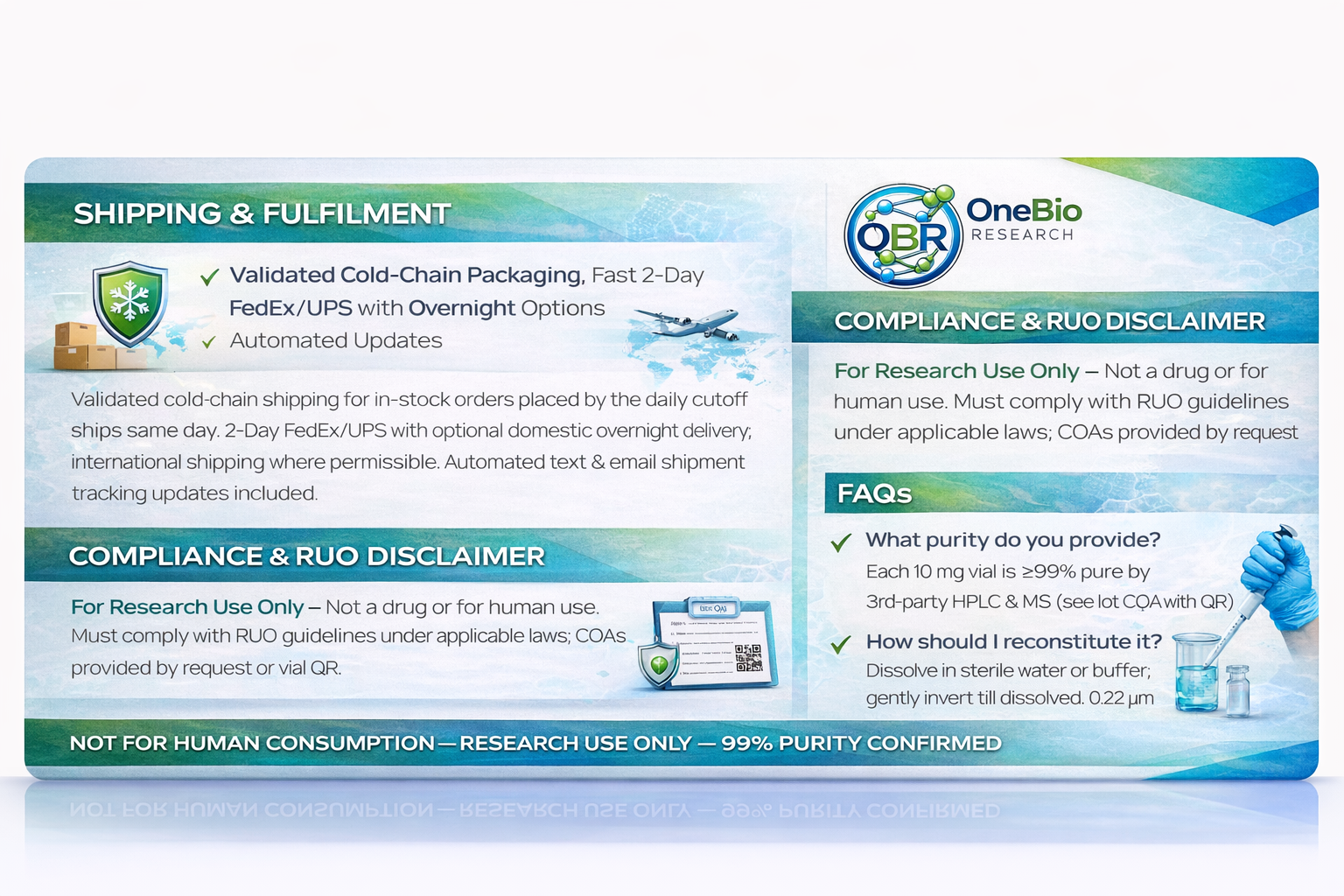
Yes. OneBio Research products are sold strictly for laboratory research and analytical testing.
Where do I find storage guidance?
Use the product label, COA, and the storage tab above. Long-term freezer storage is commonly referenced around -4°F; refrigerated short-term storage is 35–46°F.
Can I request documentation?
Yes. Use the COA/documentation request link or contact OneBio Research with the product and lot details.
Reviews
There are no reviews yet.