
Product Details
Research-grade peptides with clear specifications, COA-backed quality verification, and Fahrenheit storage guidance for laboratory use.
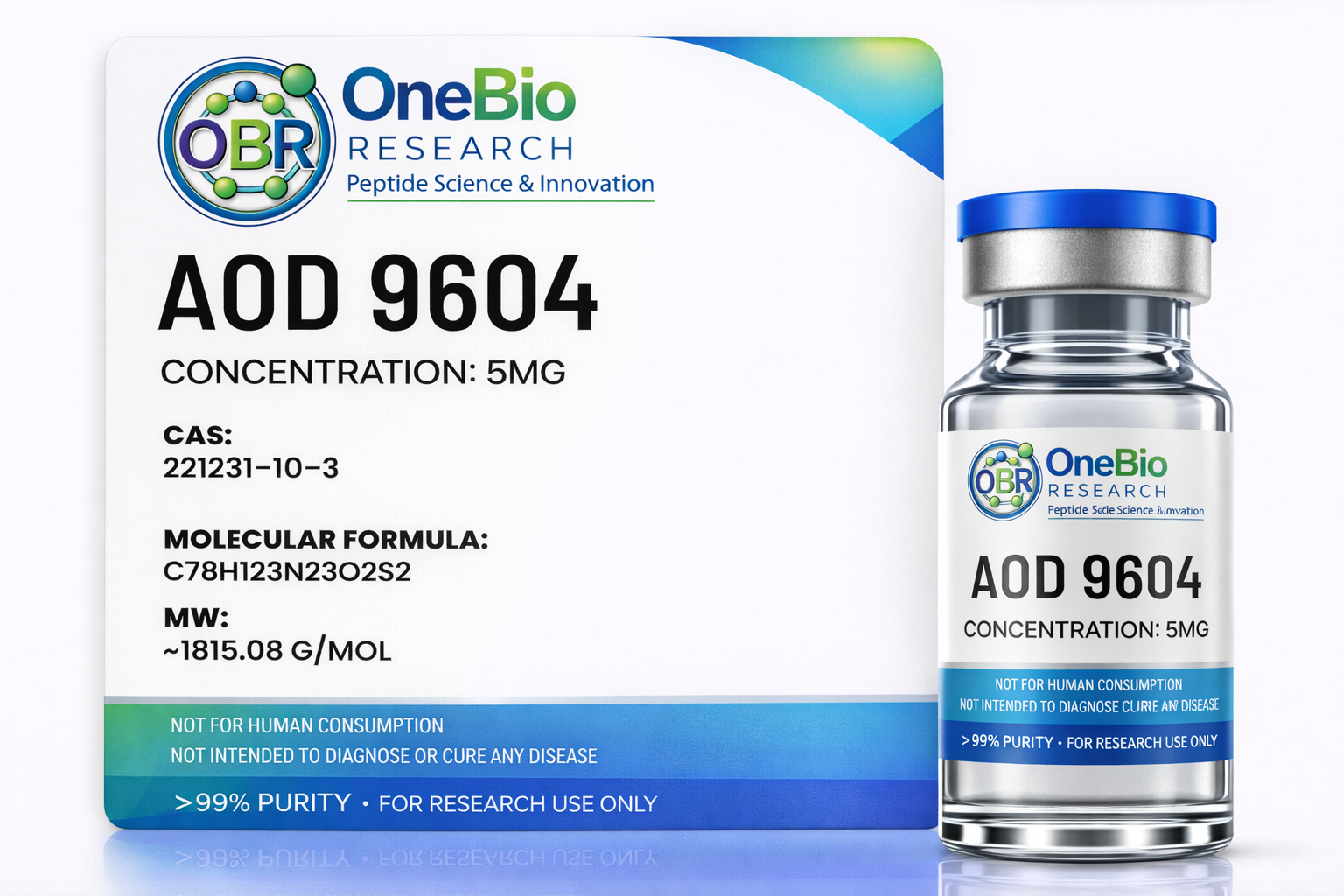
AOD-9604 -10MG
Overview
AOD-9604 is a peptide derived from a portion of human growth hormone, designed to promote fat breakdown without raising growth factors.
$80.00
Out of stock
Share this item
Description
AOD-9604 is a peptide derived from a portion of human growth hormone, designed to promote fat breakdown without raising growth factors. In animal studies, it reduced fat accumulation and supported lipolysis. While early human trials suggested some modest weight loss and good safety, larger studies did not yield meaningful results. AOD-9604 is not approved for therapeutic use, and while it is sometimes marketed off-label, its effectiveness and long-term safety remain uncertain.
AOD-9604 Research Details
AOD-9604 is derived from the C-terminal lipolytic region of human growth hormone. Literature examines fat-metabolism effects in animal models and human study contexts, along with the distinction between fragment activity and full growth-hormone signaling.
99%+ target purity or lot-specific COA value
Tyr-Leu-Arg-Ile-Val-Gln-Cys-Arg-Ser-Val-Glu-Gly-Ser-Cys-Gly-Phe
Lyophilized research material unless otherwise specified by COA
Research use only
Research Background
Modified fragment of human growth hormone residues 176-191 studied for lipolysis and metabolic research without full GH receptor growth effects. Key OneBio research contexts include metabolic research, adipocyte/lipolysis assays, hgh-fragment comparison, and peptide safety profiling.
Specifications
| Compound | AOD-9604 |
| SKU / Product | aod-9604 |
| Molecular Weight | ~1815.1 g/mol |
| Formula / Classification | C78H123N23O23S2 |
| Database / Identity Note | PubChem CID 73415725 |
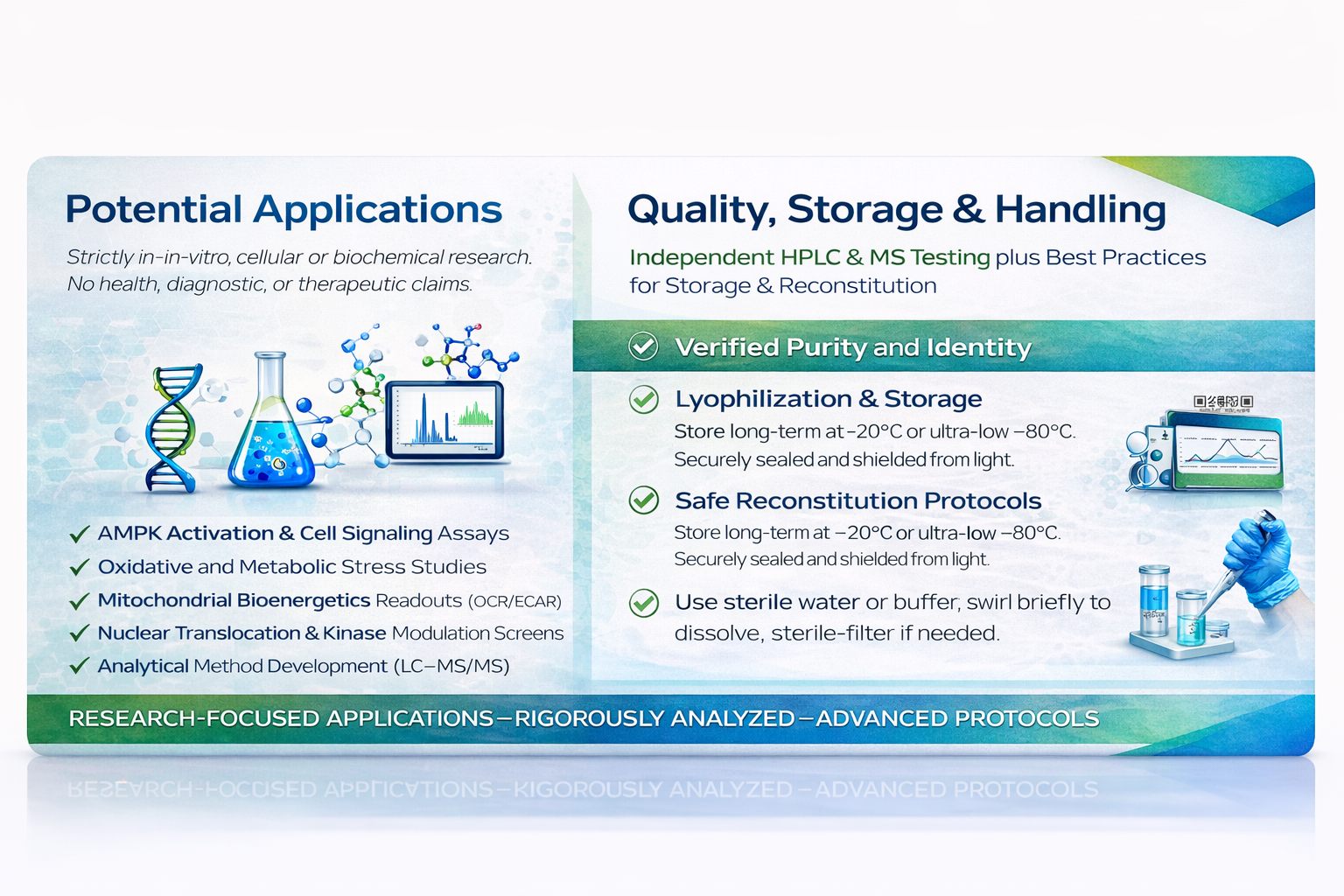
| Storage | -4°F long-term; 35-46°F short-term refrigerated; 39°F after reconstitution for up to 30 days when appropriate for the research protocol |
Quality Verification
Each batch should be reviewed against its Certificate of Analysis, including identity confirmation, purity method, mass/sequence or component confirmation, appearance, and lot-specific handling notes. Blend products should be checked against component-ratio documentation where available.
Laboratory Preparation
Prepare only inside a qualified laboratory using validated solvent choice, concentration, sterility, and storage protocols. For lyophilized peptides, use sterile deionized water or bacteriostatic water when appropriate for the research protocol, mix gently, maintain cold-chain handling, and avoid repeated freeze-thaw cycles.
Product-Specific Q&A
What is AOD-9604 used for in research?
AOD-9604 is used as a research material for metabolic research, adipocyte/lipolysis assays, hgh-fragment comparison, and peptide safety profiling. It is not offered for diagnostic, therapeutic, clinical, veterinary, or human-use applications.
What mechanism is most relevant for AOD-9604?
Modified fragment of human growth hormone residues 176-191 studied for lipolysis and metabolic research without full GH receptor growth effects.
How should AOD-9604 identity and purity be verified?
Use the lot-specific Certificate of Analysis to confirm identity, purity, mass/sequence or component profile, and any method-specific data such as LC-MS/HPLC. Technical values on this page are research references and should be checked against the delivered lot.
What storage conditions apply to AOD-9604?
-4°F long-term; 35-46°F short-term refrigerated; 39°F after reconstitution for up to 30 days when appropriate for the research protocol. Keep sealed, dry, protected from light, and avoid repeated freeze-thaw cycles after preparation.
References
- PMID 41490200: Therapeutic Peptides in Orthopaedics: Applications, Challenges, and Future Directions. Journal of the American Academy of Orthopaedic Surgeons. Global research & reviews 2026.
- PMID 15134286: AOD-9604 Metabolic. Current opinion in investigational drugs (London, England : 2000) 2004.
- PMID 25208511: Detection and in vitro metabolism of AOD9604. Drug testing and analysis 2015.
Expanded Product Information
PeptideTech-style product tools added beneath the existing OneBio product layout: tabs, specifications, COA guidance, shipping/storage information, stock-solution guidance, verification notes, and FAQ.
| Product | Current product |
|---|---|
| Form | Lyophilized research material unless otherwise stated on the product label. |
| Purity / Identity | See product listing and available COA/batch documentation. |
| Storage | Long-term freezer storage around -4°F. Short-term refrigerated storage 35–46°F. Reconstituted materials should be handled under validated laboratory protocols. |
| Use Standard | Research-use only; not for human or animal administration. |
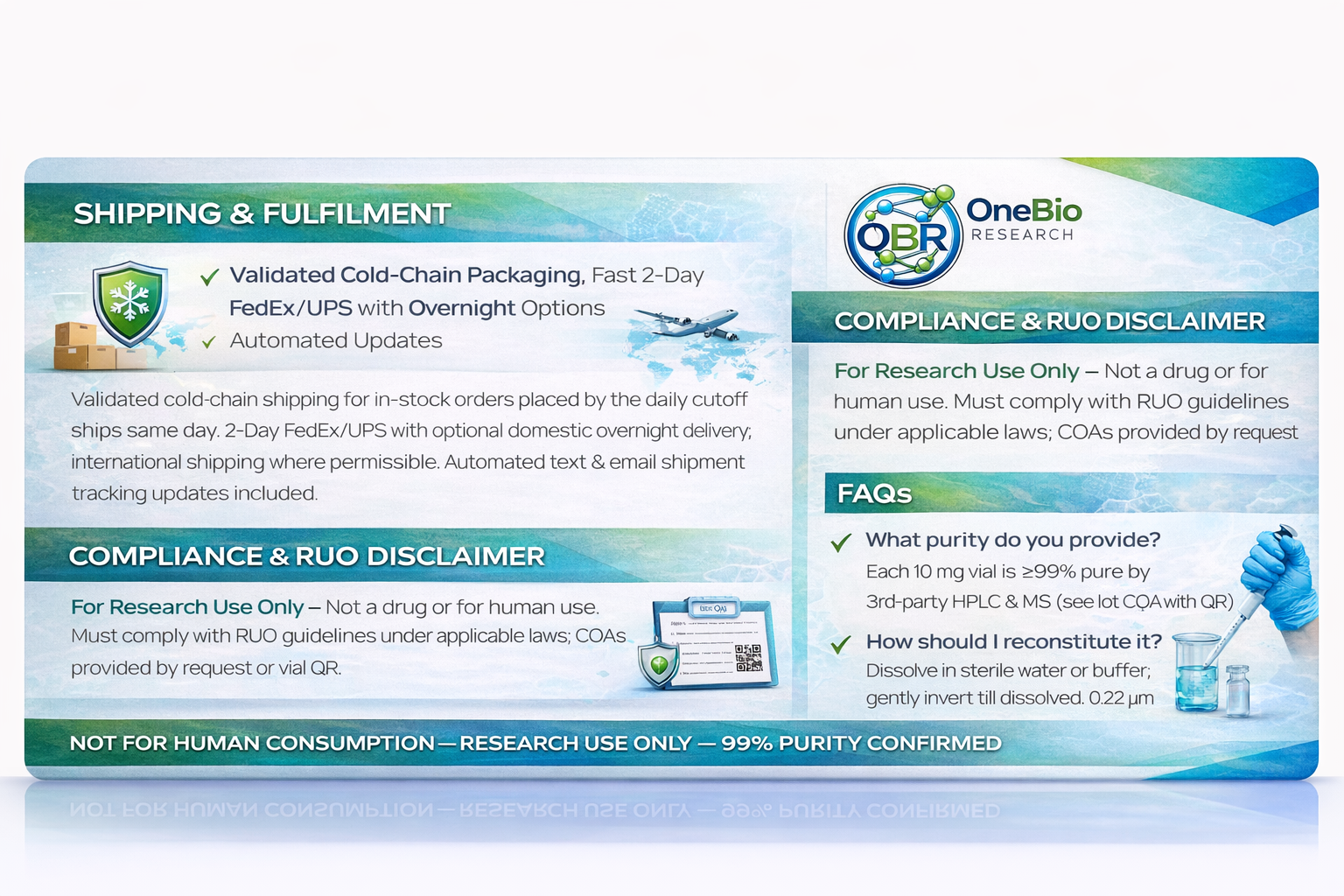
Third-party verification: Review the available Certificate of Analysis and batch documentation before use. Verify identity, purity, appearance, and lot-specific details against your lab requirements.
Are these products for research use only?
Yes. OneBio Research products are sold strictly for laboratory research and analytical testing.
Where do I find storage guidance?
Use the product label, COA, and the storage tab above. Long-term freezer storage is commonly referenced around -4°F; refrigerated short-term storage is 35–46°F.
Can I request documentation?
Yes. Use the COA/documentation request link or contact OneBio Research with the product and lot details.
Reviews
There are no reviews yet.