
Product Details
Research-grade peptides with clear specifications, COA-backed quality verification, and Fahrenheit storage guidance for laboratory use.
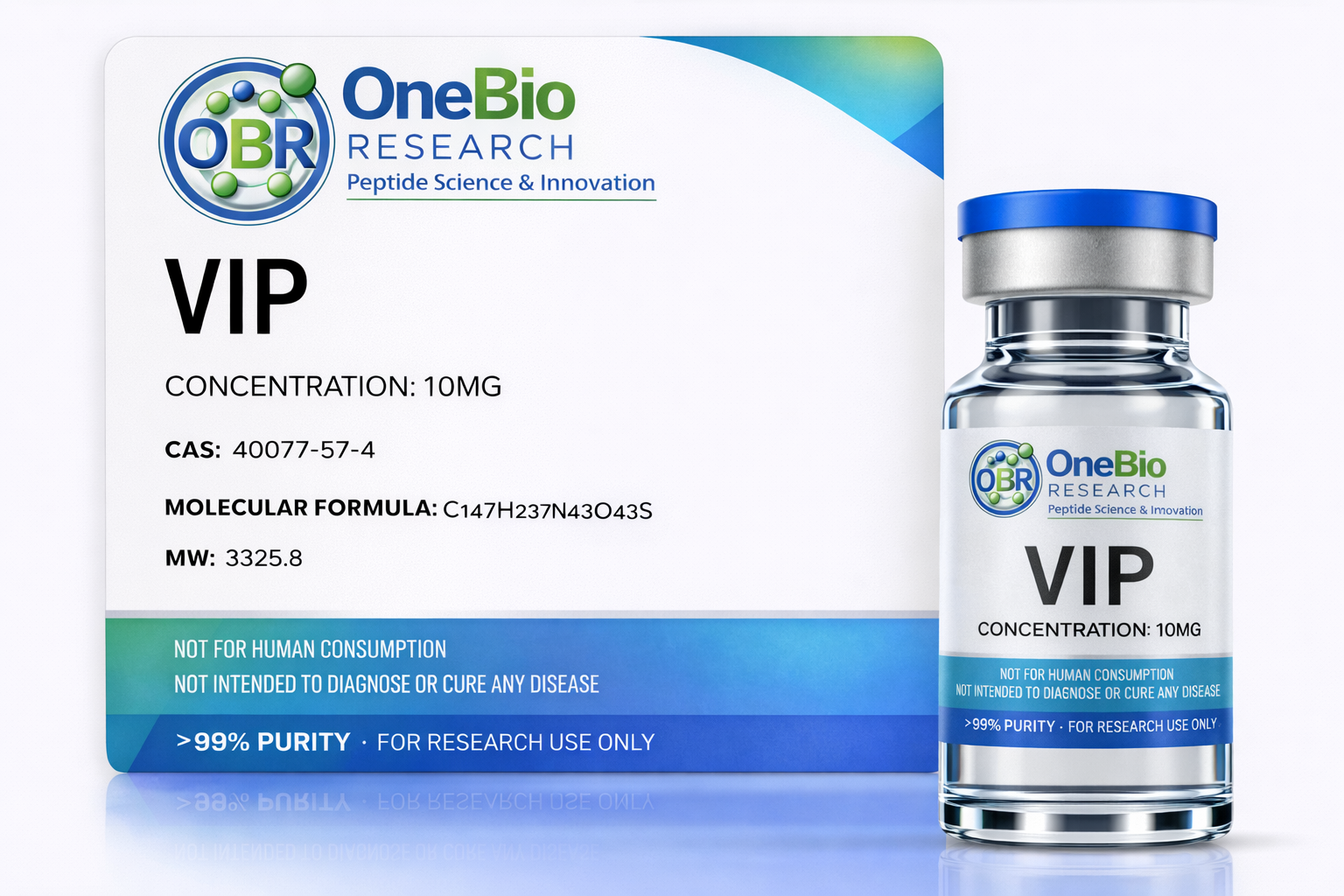
VIP10 10MG
Overview
Vasoactive Intestinal Peptide, or VIP, is a 28-amino-acid neuropeptide that acts on two receptors, VPAC1 and VPAC2, triggering pathways like increased cAMP signaling.
$35.00
Out of stock
Share this item
Description
Vasoactive Intestinal Peptide, or VIP, is a 28-amino-acid neuropeptide that acts on two receptors, VPAC1 and VPAC2, triggering pathways like increased cAMP signaling. It functions in many systems: it dilates blood vessels, modulates gut secretion, influences immune responses, and helps regulate circadian rhythms. Though VIP shows promise in animal models for conditions like pulmonary hypertension, inflammation, and metabolism, its very short half-life and broad effects mean it’s still only used in research, not approved as a therapy.
Vasoactive Intestinal Peptide (VIP) Research Details
VIP is a widely studied neuropeptide found in neural, gastrointestinal, pulmonary, endocrine, and immune tissues. It is used in research to examine VPAC receptor pharmacology, cAMP signaling, smooth-muscle/secretory biology, circadian pathways, and immunomodulatory networks.
99%+ target purity or lot-specific COA value
HSDAVFTDNYTRLRKQMAVKKYLNSILN-NH2
Lyophilized research material unless otherwise specified by COA
Research use only
Research Background
Endogenous 28-amino-acid neuropeptide acting primarily through VPAC1 and VPAC2 receptors to regulate cAMP-linked signaling. Key OneBio research contexts include vpac receptor studies, camp assays, pulmonary/gastrointestinal signaling models, and neuroimmune research.
Specifications
| Compound | Vasoactive Intestinal Peptide (VIP) |
| SKU / Product | vip10 |
| Molecular Weight | ~3325.8 g/mol |
| Formula / Classification | C147H238N44O42S |
| Database / Identity Note | PubChem CID 16133815 |
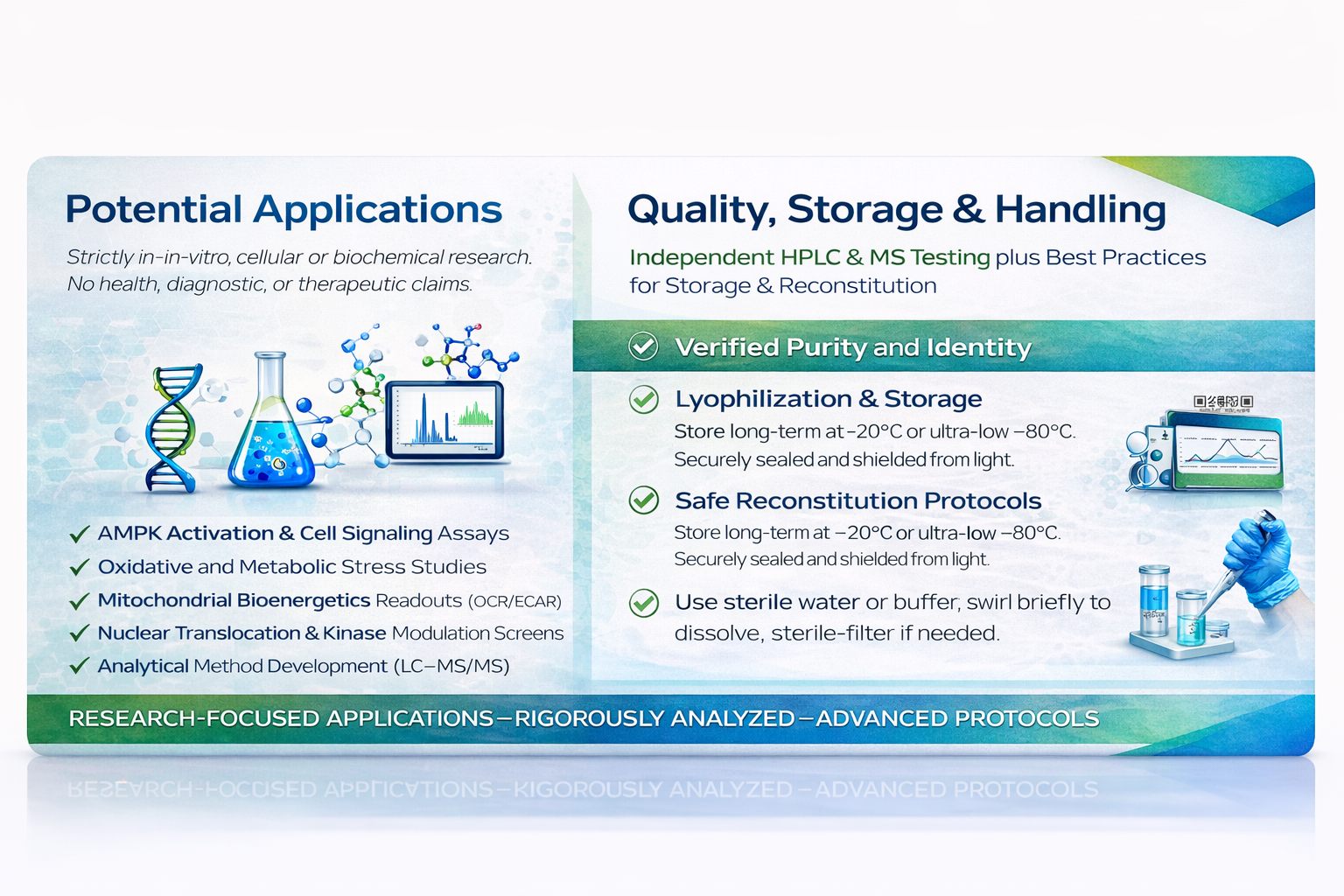
| Storage | -4°F long-term; 35-46°F short-term refrigerated; 39°F after reconstitution for up to 30 days when appropriate for the research protocol |
Quality Verification
Each batch should be reviewed against its Certificate of Analysis, including identity confirmation, purity method, mass/sequence or component confirmation, appearance, and lot-specific handling notes. Blend products should be checked against component-ratio documentation where available.
Laboratory Preparation
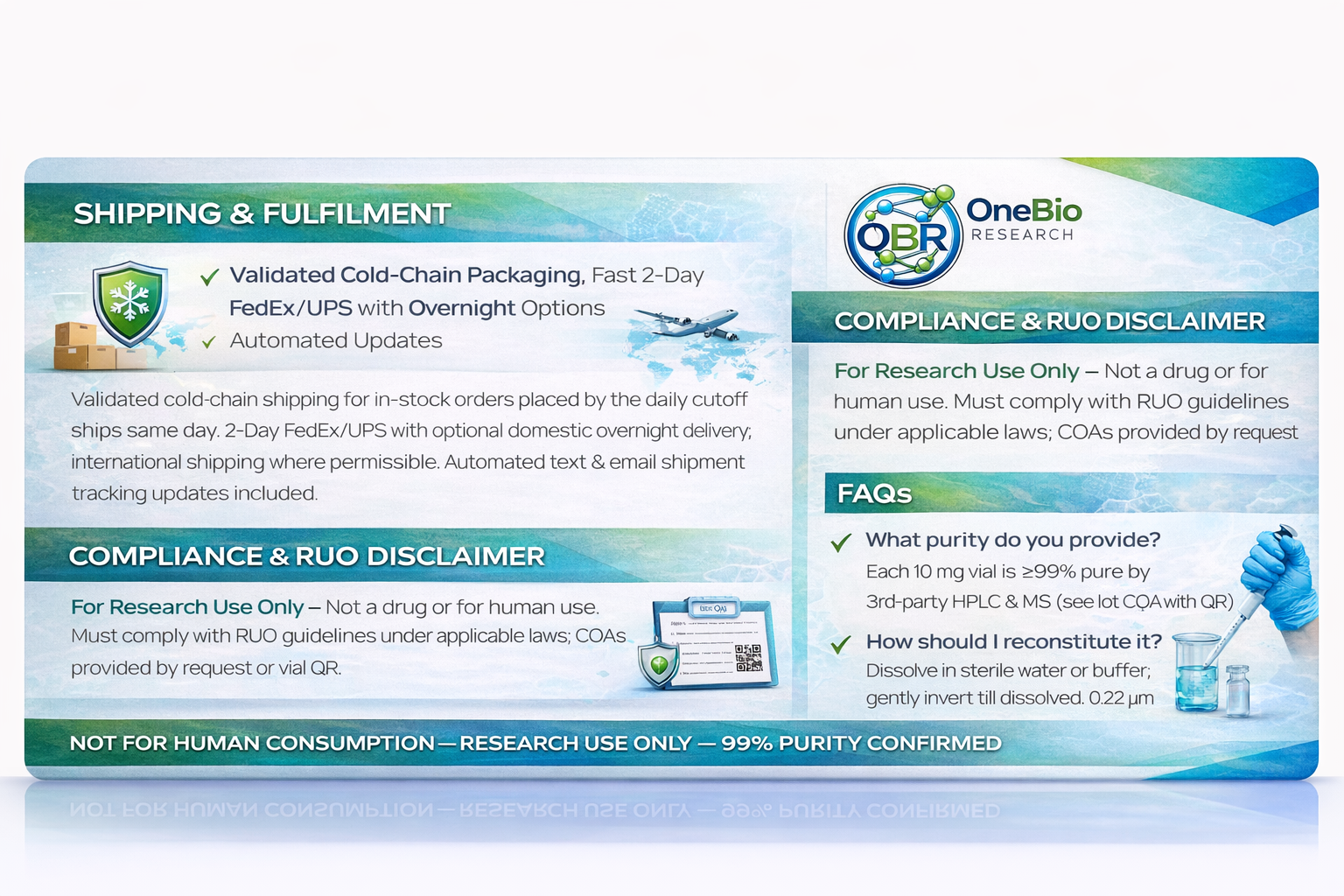
Prepare only inside a qualified laboratory using validated solvent choice, concentration, sterility, and storage protocols. For lyophilized peptides, use sterile deionized water or bacteriostatic water when appropriate for the research protocol, mix gently, maintain cold-chain handling, and avoid repeated freeze-thaw cycles.
Product-Specific Q&A
What is Vasoactive Intestinal Peptide (VIP) used for in research?
Vasoactive Intestinal Peptide (VIP) is used as a research material for vpac receptor studies, camp assays, pulmonary/gastrointestinal signaling models, and neuroimmune research. It is not offered for diagnostic, therapeutic, clinical, veterinary, or human-use applications.
What mechanism is most relevant for Vasoactive Intestinal Peptide (VIP)?
Endogenous 28-amino-acid neuropeptide acting primarily through VPAC1 and VPAC2 receptors to regulate cAMP-linked signaling.
How should Vasoactive Intestinal Peptide (VIP) identity and purity be verified?
Use the lot-specific Certificate of Analysis to confirm identity, purity, mass/sequence or component profile, and any method-specific data such as LC-MS/HPLC. Technical values on this page are research references and should be checked against the delivered lot.
What storage conditions apply to Vasoactive Intestinal Peptide (VIP)?
-4°F long-term; 35-46°F short-term refrigerated; 39°F after reconstitution for up to 30 days when appropriate for the research protocol. Keep sealed, dry, protected from light, and avoid repeated freeze-thaw cycles after preparation.
References
- PMID 26702849: Vasoactive intestinal peptide/pituitary adenylate cyclase activating polypeptide, and their receptors and cancer. Current opinion in endocrinology, diabetes, and obesity 2016.
- PMID 20641421: HSDAVFTDNYTKLRKQ-NIe-AVKK-(3-OCH3,4-OH)-FLNSSV-GABA-L-(Dap-(BMA)(2))-(64)Cu. PubMed-indexed source 2004.
- PMID 31559013: Recent advances in vasoactive intestinal peptide physiology and pathophysiology: focus on the gastrointestinal system. F1000Research 2019.
Expanded Product Information
PeptideTech-style product tools added beneath the existing OneBio product layout: tabs, specifications, COA guidance, shipping/storage information, stock-solution guidance, verification notes, and FAQ.
| Product | Current product |
|---|---|
| Form | Lyophilized research material unless otherwise stated on the product label. |
| Purity / Identity | See product listing and available COA/batch documentation. |
| Storage | Long-term freezer storage around -4°F. Short-term refrigerated storage 35–46°F. Reconstituted materials should be handled under validated laboratory protocols. |
| Use Standard | Research-use only; not for human or animal administration. |
Third-party verification: Review the available Certificate of Analysis and batch documentation before use. Verify identity, purity, appearance, and lot-specific details against your lab requirements.
Are these products for research use only?
Yes. OneBio Research products are sold strictly for laboratory research and analytical testing.
Where do I find storage guidance?
Use the product label, COA, and the storage tab above. Long-term freezer storage is commonly referenced around -4°F; refrigerated short-term storage is 35–46°F.
Can I request documentation?
Yes. Use the COA/documentation request link or contact OneBio Research with the product and lot details.
Reviews
There are no reviews yet.