
Product Details
Research-grade peptides with clear specifications, COA-backed quality verification, and Fahrenheit storage guidance for laboratory use.
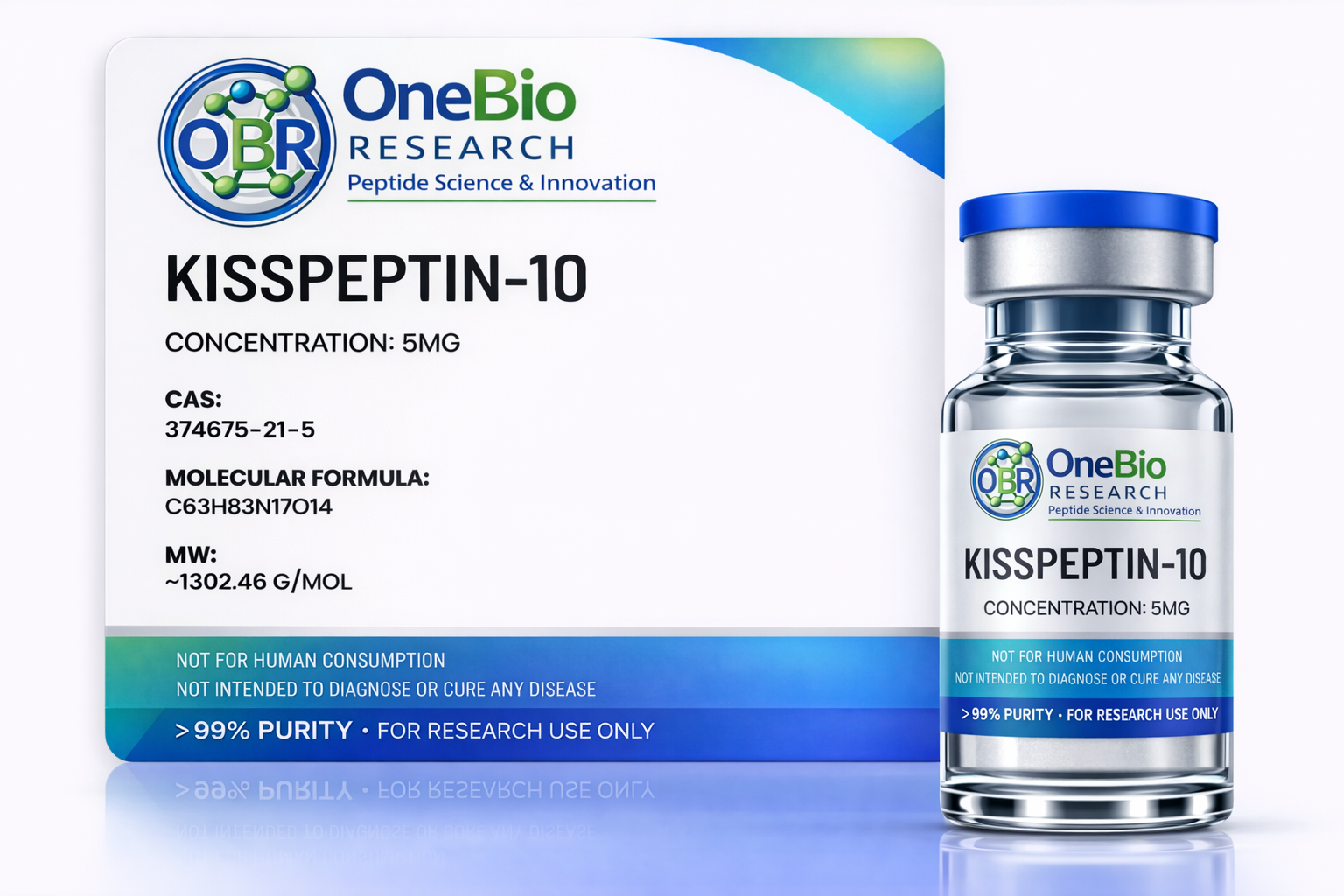
Kisspeptin-10 10-MG
Overview
Kisspeptin-10 is a decapeptide derived from the KISS1 gene that strongly activates the KISS1 receptor, triggering the release of gonadotropins like luteinizing hormone.
$35.00
Out of stock
Share this item
Description
Kisspeptin-10 is a decapeptide derived from the KISS1 gene that strongly activates the KISS1 receptor, triggering the release of gonadotropins like luteinizing hormone. It acts as a key regulator of the reproductive axis, promoting puberty and fertility by stimulating gonadotropin-releasing hormone neurons. In addition to its reproductive role, it also influences metabolism, mood, and even suppresses tumor growth, though these effects are still being actively researched.
Kisspeptin-10 Research Details
Kisspeptin-10 is a short active fragment of kisspeptin that potently activates KISS1R. Research literature connects kisspeptin signaling to GnRH release, LH/FSH regulation, puberty timing, fertility models, metabolism, placental biology, and tumor-suppression contexts.
99%+ target purity or lot-specific COA value
Tyr-Asn-Trp-Asn-Ser-Phe-Gly-Leu-Arg-Phe-NH2
Lyophilized research material unless otherwise specified by COA
Research use only
Research Background
Decapeptide ligand of KISS1R/GPR54 studied as an upstream regulator of GnRH neurons and reproductive-axis signaling. Key OneBio research contexts include kiss1r receptor assays, gnrh/lh pathway research, reproductive-axis models, and neuroendocrine signaling studies.
Specifications
| Compound | Kisspeptin-10 |
| SKU / Product | kisspeptin-10 |
| Molecular Weight | ~1302.5 g/mol |
| Formula / Classification | C63H83N17O14 |
| Database / Identity Note | PubChem CID 16129704 |
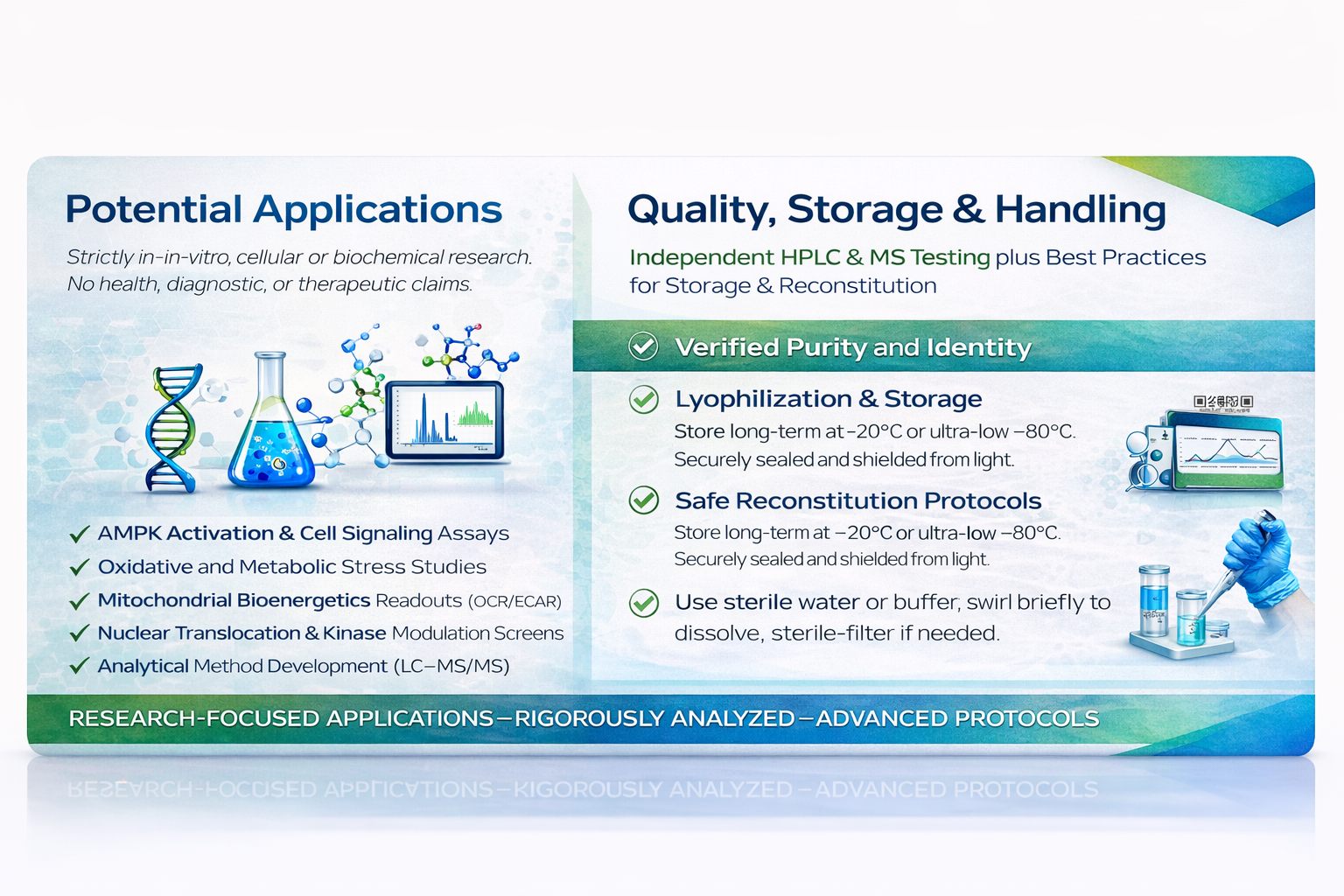
| Storage | -4°F long-term; 35-46°F short-term refrigerated; 39°F after reconstitution for up to 30 days when appropriate for the research protocol |
Quality Verification
Each batch should be reviewed against its Certificate of Analysis, including identity confirmation, purity method, mass/sequence or component confirmation, appearance, and lot-specific handling notes. Blend products should be checked against component-ratio documentation where available.
Laboratory Preparation
Prepare only inside a qualified laboratory using validated solvent choice, concentration, sterility, and storage protocols. For lyophilized peptides, use sterile deionized water or bacteriostatic water when appropriate for the research protocol, mix gently, maintain cold-chain handling, and avoid repeated freeze-thaw cycles.
Product-Specific Q&A
What is Kisspeptin-10 used for in research?
Kisspeptin-10 is used as a research material for kiss1r receptor assays, gnrh/lh pathway research, reproductive-axis models, and neuroendocrine signaling studies. It is not offered for diagnostic, therapeutic, clinical, veterinary, or human-use applications.
What mechanism is most relevant for Kisspeptin-10?
Decapeptide ligand of KISS1R/GPR54 studied as an upstream regulator of GnRH neurons and reproductive-axis signaling.
How should Kisspeptin-10 identity and purity be verified?
Use the lot-specific Certificate of Analysis to confirm identity, purity, mass/sequence or component profile, and any method-specific data such as LC-MS/HPLC. Technical values on this page are research references and should be checked against the delivered lot.
What storage conditions apply to Kisspeptin-10?
-4°F long-term; 35-46°F short-term refrigerated; 39°F after reconstitution for up to 30 days when appropriate for the research protocol. Keep sealed, dry, protected from light, and avoid repeated freeze-thaw cycles after preparation.
References
- PMID 18193176: GPR54 and kisspeptins. Results and problems in cell differentiation 2008.
- PMID 19770291: Kisspeptin signaling in the brain. Endocrine reviews 2009.
- PMID 39864941: Kisspeptin control of hypothalamus-pituitary-ovarian functions. Vitamins and hormones 2025.
Expanded Product Information
PeptideTech-style product tools added beneath the existing OneBio product layout: tabs, specifications, COA guidance, shipping/storage information, stock-solution guidance, verification notes, and FAQ.
| Product | Current product |
|---|---|
| Form | Lyophilized research material unless otherwise stated on the product label. |
| Purity / Identity | See product listing and available COA/batch documentation. |
| Storage | Long-term freezer storage around -4°F. Short-term refrigerated storage 35–46°F. Reconstituted materials should be handled under validated laboratory protocols. |
| Use Standard | Research-use only; not for human or animal administration. |
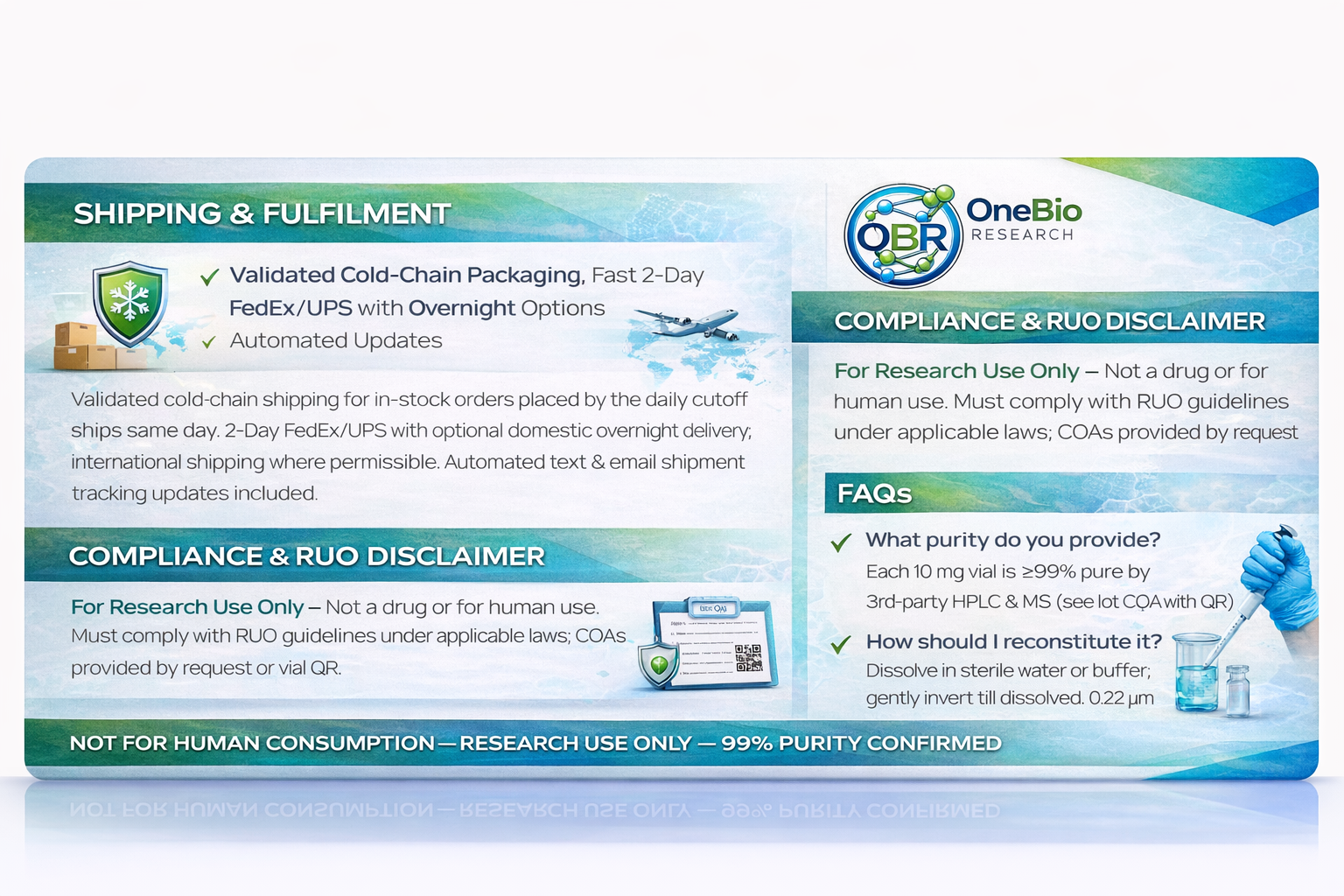
Third-party verification: Review the available Certificate of Analysis and batch documentation before use. Verify identity, purity, appearance, and lot-specific details against your lab requirements.
Are these products for research use only?
Yes. OneBio Research products are sold strictly for laboratory research and analytical testing.
Where do I find storage guidance?
Use the product label, COA, and the storage tab above. Long-term freezer storage is commonly referenced around -4°F; refrigerated short-term storage is 35–46°F.
Can I request documentation?
Yes. Use the COA/documentation request link or contact OneBio Research with the product and lot details.
Reviews
There are no reviews yet.