
Product Details
Research-grade peptides with clear specifications, COA-backed quality verification, and Fahrenheit storage guidance for laboratory use.
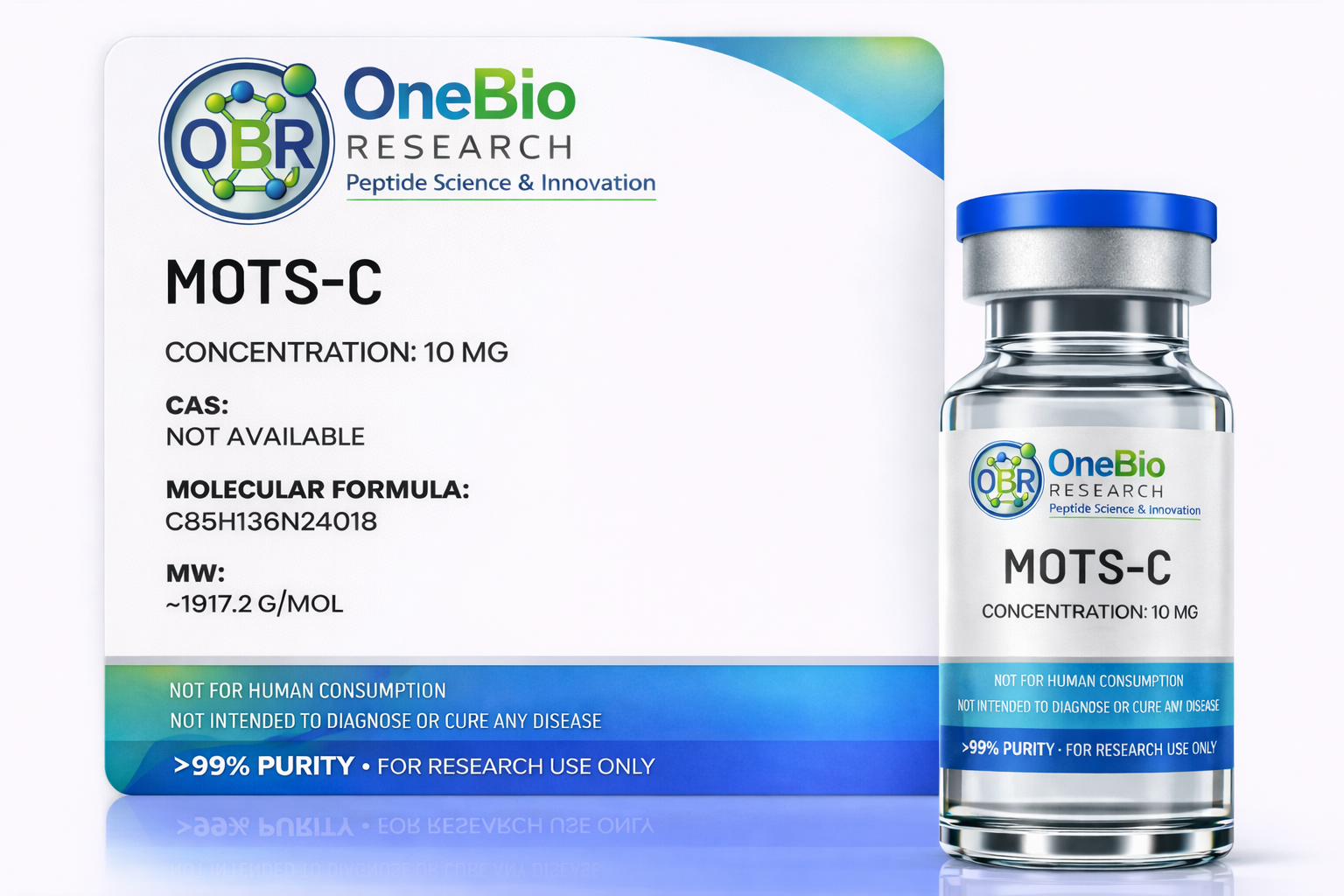
MOTS-C -10MG
Overview
MOTS-C is a mitochondrial-derived peptide composed of 16 amino acids, uniquely encoded within the mitochondrial genome rather than the nuclear DNA.
$35.00
7 in stock
Share this item
Description
MOTS-C is a mitochondrial-derived peptide composed of 16 amino acids, uniquely encoded within the mitochondrial genome rather than the nuclear DNA. This gives it a distinct role as a signaling molecule that directly links mitochondrial function to whole-body metabolism. Instead of acting like a traditional hormone, MOTS-C functions as a metabolic regulator that communicates cellular energy status and helps coordinate how the body produces, stores, and utilizes energy.
At its core, MOTS-C activates the AMP-activated protein kinase (AMPK) pathway, which is one of the body’s primary energy-sensing systems. When AMPK is activated, the cell shifts into an energy-conserving and energy-producing state. This means glucose uptake into muscle cells increases, fatty acid oxidation is enhanced, and energy production becomes more efficient. Essentially, MOTS-C tells the body to prioritize burning fuel rather than storing it.
In skeletal muscle, MOTS-C promotes increased glucose transport and utilization, allowing muscle cells to pull in more glucose from the bloodstream and use it for energy. At the same time, it enhances fat metabolism by stimulating the breakdown of stored lipids into usable energy. This dual effect—improving both glucose handling and fat oxidation—creates a more metabolically flexible state, where the body can efficiently switch between fuel sources depending on demand.
MOTS-C also plays a major role in mitochondrial function and biogenesis. It supports the creation of new mitochondria while improving the efficiency of existing ones. This leads to better ATP production, which is the primary energy currency of the cell. By improving mitochondrial output, MOTS-C enhances overall cellular energy capacity, especially in high-demand tissues like muscle, heart, and brain.
Another key function of MOTS-C is its ability to act as a nuclear signaling peptide. Under metabolic stress, it can translocate from the mitochondria into the nucleus, where it influences gene expression related to metabolism, stress resistance, and cellular survival. This allows it to directly regulate genes involved in antioxidant defense, energy balance, and metabolic adaptation.
At the systemic level, MOTS-C helps regulate insulin sensitivity, improving how cells respond to insulin and helping maintain balanced glucose levels. It also supports energy expenditure, encouraging the body to burn more calories at rest by enhancing mitochondrial activity and metabolic throughput.
In addition, MOTS-C contributes to exercise-like adaptations within the body. It promotes endurance by increasing oxidative muscle capacity, improving how efficiently muscles use oxygen and fuel during activity. This effect mimics some of the biological changes typically seen with physical training, such as increased mitochondrial density and improved metabolic efficiency.
Beyond metabolism, MOTS-C also supports cellular resilience and stress adaptation. It enhances the cell’s ability to handle oxidative stress by improving antioxidant systems and reducing the buildup of damaging reactive oxygen species. This contributes to maintaining cellular integrity and function over time.
Overall, MOTS-C functions as a master metabolic regulator, coordinating energy production, fuel utilization, mitochondrial performance, and cellular adaptation. It acts as a bridge between mitochondrial activity and whole-body metabolism, optimizing how energy is generated and used while enhancing cellular efficiency, endurance, and metabolic balance.
MOTS-c Research Details
MOTS-c is encoded within mitochondrial 12S rRNA and has become an important mitochondrial-derived peptide in metabolism research. Studies connect MOTS-c to AMPK activation, glucose utilization, exercise/stress adaptation, age-related metabolic changes, and mitonuclear communication.
99%+ target purity or lot-specific COA value
Met-Arg-Trp-Gln-Glu-Met-Gly-Tyr-Ile-Phe-Tyr-Pro-Arg-Lys-Leu-Arg
Lyophilized research material unless otherwise specified by COA
Research use only
Research Background
Mitochondrial-derived 16-amino-acid peptide studied as a metabolic signaling molecule involving AMPK, stress response, and nuclear gene-expression programs. Key OneBio research contexts include mitochondrial signaling, ampk pathway assays, glucose metabolism models, exercise biology, and aging-metabolism research.
Specifications
| Compound | MOTS-c |
| SKU / Product | mots-c |
| Molecular Weight | ~2174.6 g/mol |
| Formula / Classification | C101H152N28O22S2 |
| Database / Identity Note | PubChem CID 145996610 |
| Storage | -4°F long-term; 35-46°F short-term refrigerated; 39°F after reconstitution for up to 30 days when appropriate for the research protocol |
Quality Verification
Each batch should be reviewed against its Certificate of Analysis, including identity confirmation, purity method, mass/sequence or component confirmation, appearance, and lot-specific handling notes. Blend products should be checked against component-ratio documentation where available.
Laboratory Preparation
Prepare only inside a qualified laboratory using validated solvent choice, concentration, sterility, and storage protocols. For lyophilized peptides, use sterile deionized water or bacteriostatic water when appropriate for the research protocol, mix gently, maintain cold-chain handling, and avoid repeated freeze-thaw cycles.
Product-Specific Q&A
What is MOTS-c used for in research?
MOTS-c is used as a research material for mitochondrial signaling, ampk pathway assays, glucose metabolism models, exercise biology, and aging-metabolism research. It is not offered for diagnostic, therapeutic, clinical, veterinary, or human-use applications.
What mechanism is most relevant for MOTS-c?
Mitochondrial-derived 16-amino-acid peptide studied as a metabolic signaling molecule involving AMPK, stress response, and nuclear gene-expression programs.
How should MOTS-c identity and purity be verified?
Use the lot-specific Certificate of Analysis to confirm identity, purity, mass/sequence or component profile, and any method-specific data such as LC-MS/HPLC. Technical values on this page are research references and should be checked against the delivered lot.
What storage conditions apply to MOTS-c?
-4°F long-term; 35-46°F short-term refrigerated; 39°F after reconstitution for up to 30 days when appropriate for the research protocol. Keep sealed, dry, protected from light, and avoid repeated freeze-thaw cycles after preparation.
References
- PMID 42324588: Mitochondrial-derived peptide MOTS-c activates metabolic signaling but blunts reparative function in human mesenchymal stromal cells. Inflammation and regeneration 2026.
- PMID 40872612: Exercise-Induced Muscle-Fat Crosstalk: Molecular Mediators and Their Pharmacological Modulation for the Maintenance of Metabolic Flexibility in Aging. Pharmaceuticals (Basel, Switzerland) 2025.
- PMID 36677050: MOTS-c Functionally Prevents Metabolic Disorders. Metabolites 2023.


Expanded Product Information
PeptideTech-style product tools added beneath the existing OneBio product layout: tabs, specifications, COA guidance, shipping/storage information, stock-solution guidance, verification notes, and FAQ.
| Product | Current product |
|---|---|
| Form | Lyophilized research material unless otherwise stated on the product label. |
| Purity / Identity | See product listing and available COA/batch documentation. |
| Storage | Long-term freezer storage around -4°F. Short-term refrigerated storage 35–46°F. Reconstituted materials should be handled under validated laboratory protocols. |
| Use Standard | Research-use only; not for human or animal administration. |
Third-party verification: Review the available Certificate of Analysis and batch documentation before use. Verify identity, purity, appearance, and lot-specific details against your lab requirements.
Are these products for research use only?
Yes. OneBio Research products are sold strictly for laboratory research and analytical testing.
Where do I find storage guidance?
Use the product label, COA, and the storage tab above. Long-term freezer storage is commonly referenced around -4°F; refrigerated short-term storage is 35–46°F.
Can I request documentation?
Yes. Use the COA/documentation request link or contact OneBio Research with the product and lot details.
Reviews
There are no reviews yet.